Using SQLite to Organize Design Data

Using SQLite to Organize Design Data

I haven’t written purely about tech in a long time, but this is a particularly interesting intersection of tech and game design, so I thought I would share it with everybody. Be warned though: This is one of those posts that’s just about the thought process I went through for something and the solution I reached. I’m most definitely not advocating this solution for everybody. Think about it and pick the solution that works for you the best. By now you’ve probably heard of Lasting Legacy: you’re managing a family around the 19th century through several generations, socializing, choosing good marrying prospects, and helping family members pick an occupation. Ah, occupations… ...

Porting My Game Code To Mac OS

Porting My Game Code To Mac OS

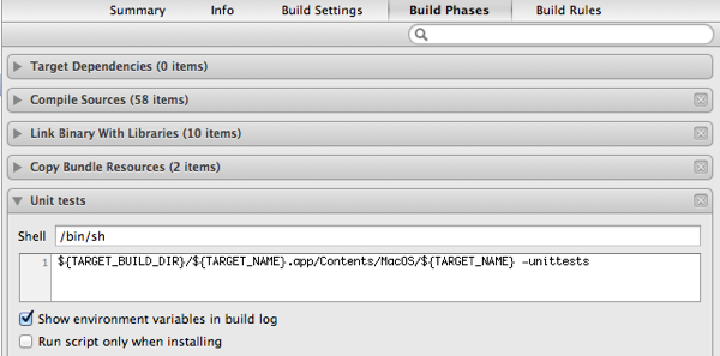
I’m still working on prototypes. I’ve spent the last six months going through different game ideas and working on prototype after prototype. Along the way I’ve made over 20 different prototypes on iPad or iPhone. I’m sure a lot of those prototypes would have made decent iOS games, but I wasn’t particularly excited to develop them all the way and take them to completion. I’m looking for something that’s both very interesting to develop and something I can proudly point to after it ships. Right now I have a couple of game ideas in hand that I’m pretty excited about. I prototyped one of those, but I quickly realized it might be a game better suited for desktops rather than iOS, so I decided to write my next prototype for that game on the Mac. Maybe another day I’ll write a post about prototypes, but what I want to write about today is my experience moving over my prototyping code to the Mac. ...

iCloud Demystified

iCloud Demystified

Play a game on a device, put it down, pick up another device, and continue playing exactly where you left off. This is the future of games. That future is a reality today for some games and apps (Netflix, Kindle), and I’m convinced that players will expect that in most games in the next year or so. So obviously, the next bit of new iOS tech I decided to try was iCloud. I would love to turn Flower Garden into that kind of seamless experience, independently of the device you use to access it. As a quick spoiler, it turns out I won’t be able to make Flower Garden quite so seamless without a lot of extra work. But I learned a lot along the way and I should be able to take a small step in that direction. ...

URL Shorteners In Under Two Minutes

URL Shorteners In Under Two Minutes

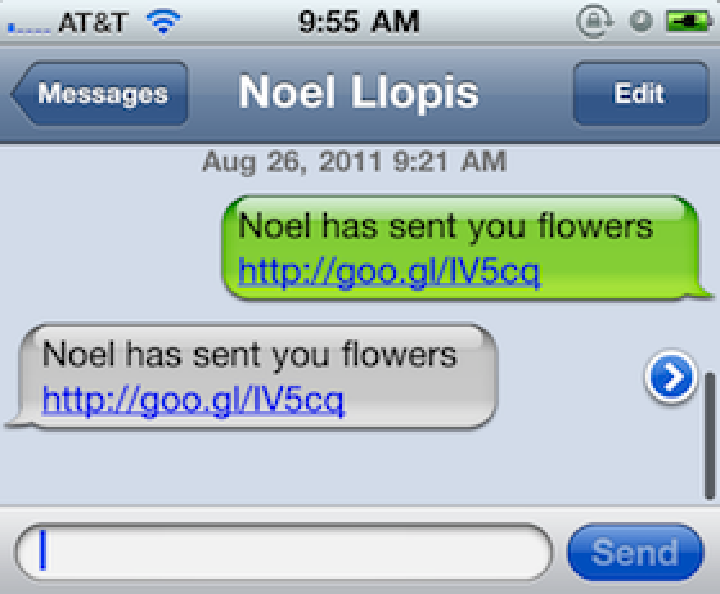
This morning I added the goo.gl URL shortener to Flower Garden, so I thought a quick post with sample code might be helpful for other developers looking to do something similar. I use the URL shortener in Flower Garden to send bouquets through SMS. Space is limited in a text message, so the message just contains some text explaining what is it and the URL pointing to the bouquet image. (Yes, I would much rather send them through MMS, but Apple isn’t exposing that yet to developers). In this case, the full URL is http://flowers.snappytouch.com/sms.php?id=949618b4b3c6f3d76e32b45446e238a0 which gets thankfully shortened to http://goo.gl/IV5cq. ...

Analytics For iOS Games

Analytics For iOS Games

Unlike a lot of console and PC games, most mobile and web games keep evolving over time [1]. It’s up to a game’s designers to ultimately decide how to change and improve the game, but the more data about players’ habits they have, the more informed a decision they’ll be able to make. Having good analytics on iOS games is simply essential these days. ...

Writing Reusable Code

Writing Reusable Code

Some people asked what I meant by a “toolkit architecture” in the previous post about my middleware fears. It turns out I wrote about that in a previous Inner Product column that for some reason I never reposted here. I think at the time I wrote this (late 2008), I already wasn’t very concerned about writing reusable code, and I was focusing it mostly with respect to using other people’s code and how I wanted it to be architected. ...

My Fear of Middleware

My Fear of Middleware

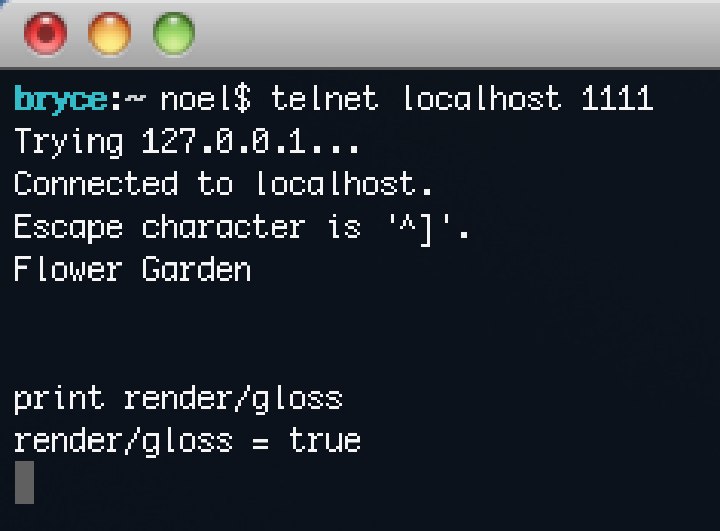
Once upon a time, the idea of using some kind of middleware or major external library in my projects was out of the question. Writing all my code was the one and true way! I had a bad case of NIH syndrome. Over the years I’ve mellowed out quite a bit. Now I recognize my obsession with writing endless tools and technology was more of an escape from doing the really hard part of game development. In comparison to making all the decisions involved in the design and implementation of the game itself, writing the perfect resource streaming system sounds like a really good time. It’s amazing how early it started too: I still remember spending weeks writing a Basic-to-assembly translator in 1986, before I had even heard the word “compiler”. Now I just want to make games. ...

The Curious Case of Casey and The Clearly Deterministic Contraptions

The Curious Case of Casey and The Clearly Deterministic Contraptions

As we gear up for Casey’s Contraptions launch on May 19th, this is the first post in a series dealing with different aspects of the game. I’m planning on covering technical aspects like today, but also design and other parts of development. For those of you who have been living under a rock and haven’t seen the Casey’s Contraptions video, go watch it now. I’ll wait. Or even better, here it is. You don’t even have to leave this page: ...

Start Pre-allocating And Stop Worrying

Start Pre-allocating And Stop Worrying

One of the more frequent questions I receive is what kind of memory allocation strategy I use in my games. The quick answer is none (at least frame to frame, I do some allocation at the beginning of each level on a stack-based allocator). This reprint of one of my Inner Product column covers quite well how I feel about memory allocation. We’ve all had things nagging us in the back of our minds. They’re nothing we have to worry about this very instant, just something we need to do sometime in the future. Maybe that’s changing those worn tires in the car, or making an appointment with the dentist about that tooth that has been bugging you on and off. ...

Life In The Top 100 And The Google App Engine

Life In The Top 100 And The Google App Engine

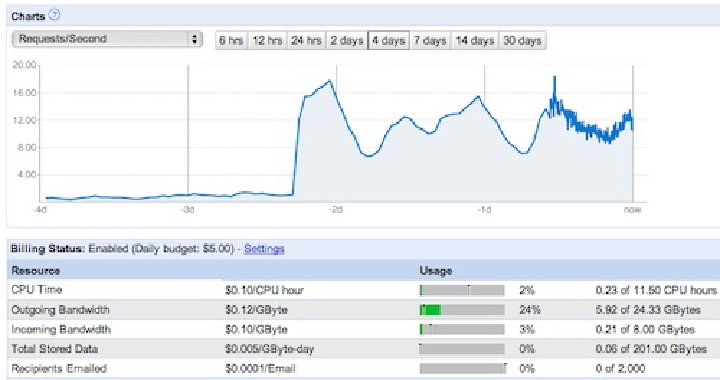
A few weeks ago I wrote about using the Google App Engine as a back end for Flower Garden. One of the comments I heard from several people is that the Google App Engine pricing scheme is “scary” due to its unpredictability. What if your server gets very busy and you find yourself with a huge bill? Google App Engine Costs At the time I wrote that post, the bandwidth of Flower Garden (and Flower Garden Free) was just under the free bandwidth allowance, so I didn’t have to pay anything. However, this last week, after riding the Pocket Frogs rocket, Flower Garden Free shot up to the #56 overall app in the US. And boy, did that make a difference in server usage! ...

Lag: The Bane Of Touch Screens

Lag: The Bane Of Touch Screens

Lag in games is as inevitable as taxes. It’s something we can try to minimize, but we always need to live with it. Earlier this week, I noticed that input for my new iPad game was very laggy. Excessively so, to the point it was really detracting from the game, so I decided I had to look into it a bit more. Lag In Games I’m defining lag as the time elapsed between the moment the player performs an input action (press a button, touch the screen, move his finger), until the game provides some feedback for that input (movement, flash behind a button, sound effect). ...

Google App Engine As Back End For iPhone Apps

Google App Engine As Back End For iPhone Apps

As soon as a game involves servers, there’s no such a thing anymore as “ship and forget”. Flower Garden put this in evidence about a month ago when I started getting complaints from users that the Flower Shop kept going down. Sometimes they weren’t even getting the items they were purchasing! (fortunately they can always do a free re-download, but they don’t always know that). Flower Garden was using a shared Dreamhost server to upload bouquets, host in-game news, and, most importantly, to serve the Flower Shop (which involves hosting the static shop files, redeeming promo codes, recording transactions, verifying receipts with Apple’s server, and delivering purchased content). All the Flower Shop functionality was implement in PHP and using a mySQL database. ...

Prototyping: You're (Probably) Doing It Wrong

Prototyping: You're (Probably) Doing It Wrong

You’re not alone, I was also doing prototyping wrong until a few years ago. There are probably many different ways of prototyping games correctly, and maybe your way works great for you. In that case, a more accurate title for this post could have been “Prototyping: I Was Doing It Wrong”. A good game prototype is something fast/cheap that allows you to answer a specific question about your game. The key points there are fast/cheap and specific question. It’s not a level of a game, it’s not a “vertical slice”, and it’s certainly not an engine for the game. ...

Remote Game Editing

Remote Game Editing

I’ve long been a fan of minimal game runtimes. Anything that can be done offline or in a separate tool, should be out of the runtime. That leaves the game architecture and code very lean and simple. One of the things you potentially give up by keeping the game runtime to a minimum is an editor built in the game itself. But that’s one of those things that sounds a lot better than it really is. From a technical point of view, having an editor in the game usually complicates the code a huge amount. All of a sudden you need to deal with objects being created and destroyed randomly (instead of through clearly defined events in the game), and you have to deal with all sorts of crazy inputs and configurations. ...

Managing Data Relationships

Managing Data Relationships

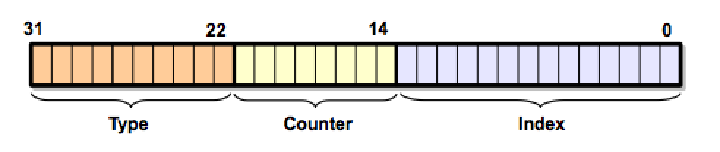
_I’ve been meaning to put up the rest of the Inner Product columns I wrote for Game Developer Magazine, but I wasn’t finding the time. With all the recent discussion on data-oriented design, I figured it was time to dust some of them off. This was one of the first columns I wrote. At first glance it might seem a completely introductory topic, not worth spending that much time on it. After all, all experience programmers know about pointers and indices, right? True, but I don’t think all programmers really take the time to think about the advantages and disadvantages of each approach, and how it affects architecture decisions, data organization, and memory traversal. ...